What Masturbation Reveals About Relationships
I’ve apparently been silently doing my part all year and didn’t even realize we had an entire month dedicated to giving ourselves a hand.
May is Masturbation Month, which usually sparks a lot of surface-level conversations online. Jokes, outrage, moral panic, endless debates about porn, and people projecting their relationship wounds onto strangers online. The internet has a way of turning intimacy into either outrage or performance, while the quieter and more difficult conversations underneath rarely get touched at all.
Still, underneath all of that noise, I think there is actually a meaningful relationship conversation worth having.
Where Masturbation Awareness Month Came From
Masturbation Awareness Month originally grew out of broader conversations around sexual shame, education, and bodily autonomy after former U.S. Surgeon General Joycelyn Elders sparked national controversy in the 1990s by suggesting masturbation should be discussed honestly as part of sexual education.
At its core, the conversation was never really just about the act itself. It was about honesty, self-awareness, shame, autonomy, and whether people could talk openly about sexuality without collapsing into fear or moral panic. Ironically, relationships still struggle with many of those same conversations today.
What We Were Actually Fighting About
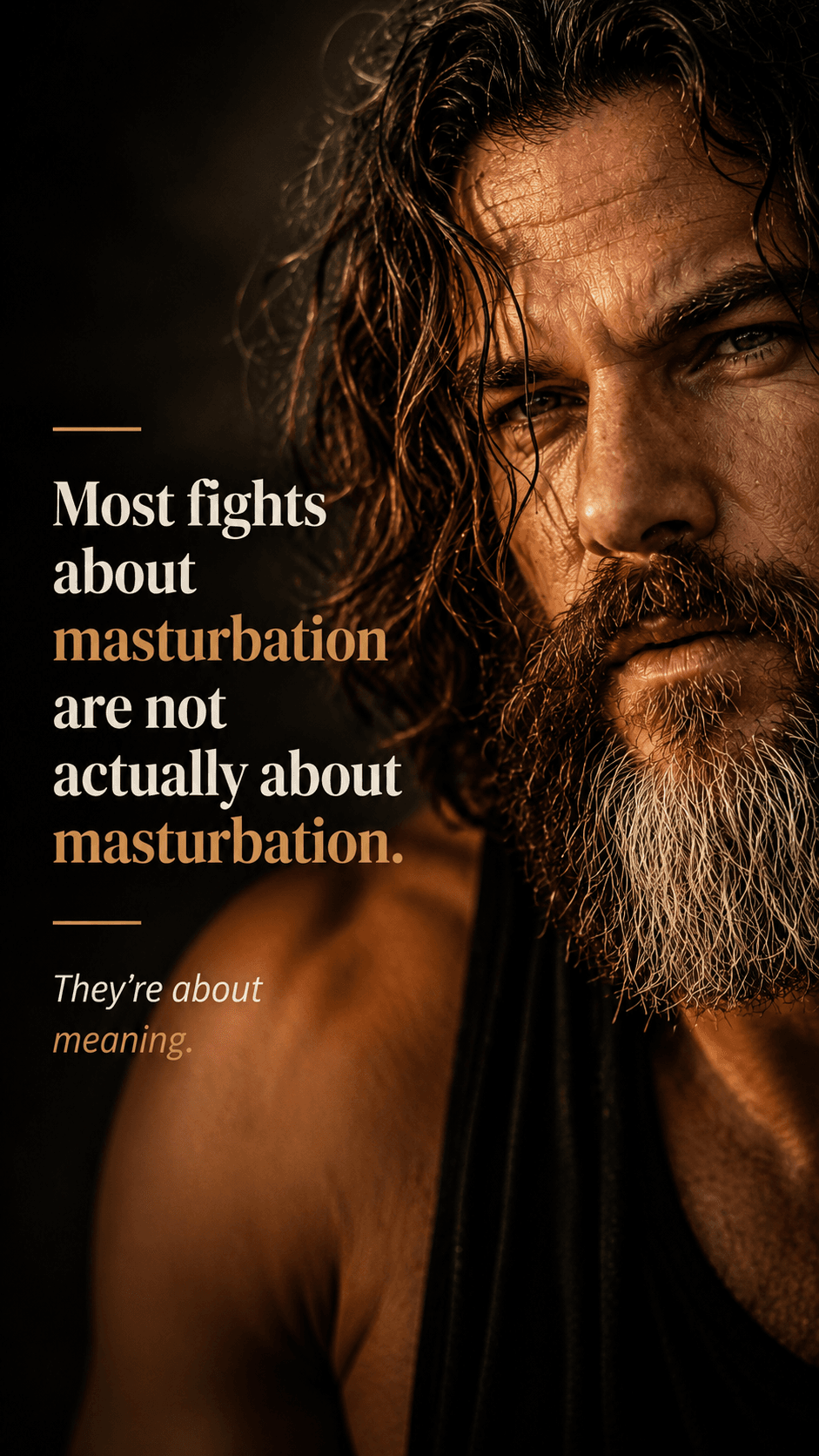
My wife and I have had more than a couple of arguments about masturbation over the years, and one of the earliest happened around the time of our miscarriage. She experienced my actions as pressure, while I experienced them as relief from pressure. At the time, neither of us really understood what was happening underneath the reaction.
Looking back now, I can see much more clearly that we were not actually arguing about masturbation itself. We were arguing about grief, emotional distance, overwhelm, and the meanings both of us attached to the behavior without fully talking about them out loud. That’s the part I think a lot of couples miss when these conversations happen.
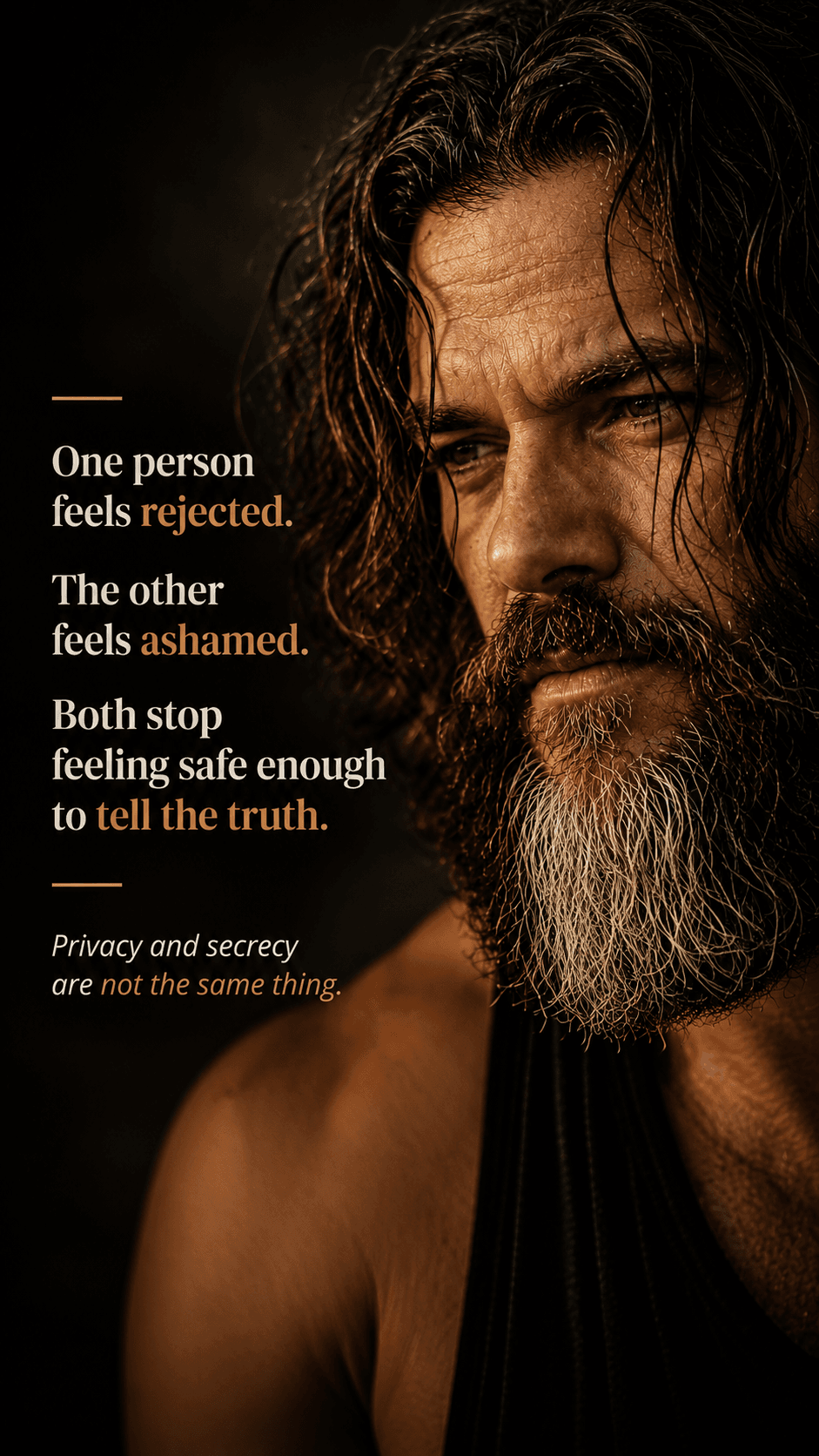
People often argue about masturbation, porn, desire, frequency, or fantasy as though the issue is purely sexual, when most of the time the real conversation is emotional and relational. One partner feels rejected while the other feels pressured, monitored, or ashamed for having needs at all, and distance grows quickly when both people are reacting to meanings neither fully understands yet. That was certainly true for us.
During the miscarriage, emotions were already raw, grief was sitting in the room whether we acknowledged it directly or not, and both of us were struggling in very different ways. What I experienced internally as regulation and release landed for her as disconnection and emotional absence. Both were real experiences happening at the same time.
At the time, I was so focused on managing my own internal pressure that I did not fully understand how emotionally alone she felt beside me. My own shame came up quickly after that, and instead of being sensitive to the pain underneath her reaction, I became defensive toward what looked like anger and resentment on the surface.
The Difference Between Privacy and Secrecy
That distinction matters, because masturbation itself is not automatically healthy or unhealthy. Sometimes it’s simple self-connection, stress relief, fantasy, curiosity, or regulation. Sometimes it becomes avoidance. Sometimes it becomes compulsive. Sometimes it becomes the safest place a person can go when intimacy inside the relationship no longer feels emotionally safe or accessible.
Most couples never really talk about those differences with much honesty. Instead, they argue about the act itself while never discussing what role the behavior is actually serving inside the relationship or inside themselves. Then shame enters the conversation, defensiveness follows close behind, curiosity disappears almost immediately, and partners begin monitoring each other instead of understanding each other. Questions start sounding like accusations, silence grows, and resentment quietly starts rewriting the story of the relationship in the background.
One of the biggest distinctions I’ve learned over the years is the difference between privacy and secrecy. Privacy protects individuality. Secrecy protects disconnection.
Healthy relationships usually leave room for both shared sexuality and individual sexuality because being in a relationship does not erase someone’s private inner world, fantasy life, bodily autonomy, or personal relationship with their own sexuality. At the same time, when sexuality becomes hidden, compulsive, dishonest, or emotionally isolating, the problem is usually not just the behavior itself. The deeper problem is often that the relationship no longer feels safe enough for honesty.
The Harder Conversation Underneath
That’s where many couples actually get stuck, not in desire itself, but in truth.
Can we talk about insecurity without turning it into control? Can we talk about desire without collapsing into shame? Can we talk about loneliness, disconnection, resentment, or unmet needs before those things harden into emotional distance that neither person knows how to cross anymore?
Those are much harder conversations than simply deciding whether masturbation is “okay” or “not okay.”
I’ve worked with enough couples now to know that most people are not actually looking for perfection from their partner. They are looking for emotional safety, honesty, reassurance, and connection. They want to feel chosen, considered, and emotionally important, even when stress, grief, hormones, exhaustion, children, trauma, or life itself complicates intimacy.
Relationships that survive these conversations usually are not the ones with the strictest rules. They are the ones where both people remain emotionally reachable, even when the conversation is uncomfortable.
That does not mean every couple will agree on porn, masturbation, fantasy, or sexual expectations. Some couples genuinely have incompatible values around sexuality, and pretending otherwise helps nobody. What matters is whether both people can stay grounded enough to discuss the topic without collapsing into blame, secrecy, defensiveness, or control. That takes maturity, nervous system regulation, and relational leadership from both people.

What Awareness Actually Means
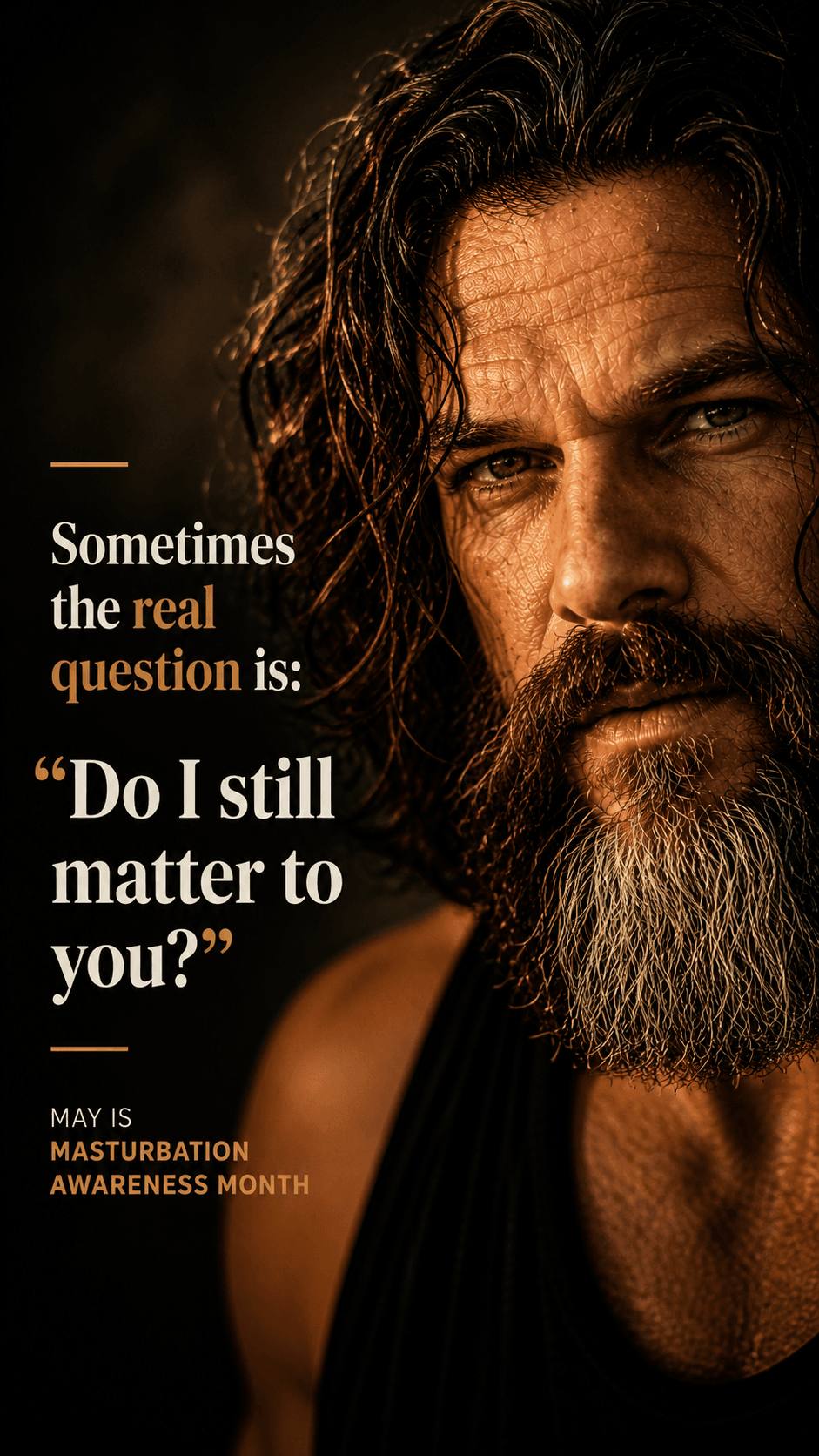
Which is probably the real value of something like Masturbation Awareness Month once you strip away the clickbait, outrage cycles, and awkward jokes. Not permission. Not shame. Awareness.
Awareness of how we use sexuality, what we avoid through it, what we fear, what we hide, what we need, and what we still struggle to say out loud to the people closest to us. Because sometimes the fight was never really about masturbation in the first place. Sometimes it was grief. Sometimes it was fear. Sometimes it was loneliness. Sometimes it was the quiet terror of wondering whether you are still wanted by the person you love.
Those are vulnerable conversations, and most people would rather argue about behavior than sit directly inside those feelings. I understand that impulse more than I probably used to admit. Still do sometimes, because underneath a lot of relationship conflict around sexuality, there is usually a much more human question hiding there: “Do I still matter to you?” And honestly, that question deserves far more care than most couples ever give it.
When You Keep Having the Same Fight
If this conversation feels familiar, if you and your partner keep having the same arguments around intimacy, desire, disconnection, pressure, or emotional safety without ever really reaching the deeper layer underneath it, that’s often where structured support can help.
Most couples are not failing because they care too little. They’re struggling because they don’t know how to stay connected while talking about difficult things honestly.
That work takes structure, self-awareness, communication skills, and the ability to slow the conversation down enough to understand what’s actually happening beneath the reaction.
These are the kinds of conversations I help couples slow down and navigate every day.
If this resonates and you’re ready to approach these conversations differently, you can learn more about coaching or book a Clarity Session at https://sirchristopher.org/clarity-session---sir-christopher