The Problem Might Not Be Discipline. It Might Be Capacity.
Many problems that look like discipline problems are actually capacity problems.
Over the last few weeks a realization has been slowly forming, and the more I sit with it the harder it is to ignore.
I’m starting to suspect that many of the problems I’ve tried to solve with strategy may actually be capacity problems. When I say capacity, I’m not talking about productivity systems or better time management, I’m talking about nervous system capacity, the ability to stay present and grounded when life inevitably turns up the pressure.
The more I pay attention to this idea, the more it seems to explain a surprising number of moments that used to confuse me.
When Pressure Exceeds Our Capacity
Think about the moments where things suddenly go sideways. A conversation becomes tense, your heart rate jumps, your mind goes blank, and later you think of the perfect thing you wish you had said.
Most of us have experienced that strange gap between knowing and doing.
Stress shows up, conflict shows up, uncertainty shows up, and suddenly the nervous system shifts into survival mode and begins reacting before the thinking part of the brain has a chance to weigh in.
We argue, we shut down, we withdraw, or we try to smooth everything over so the tension will disappear. In that moment it doesn’t matter how thoughtful your philosophy is or how many books you’ve read about communication or mindfulness, because the nervous system is driving the car and the rest of you is just along for the ride.
I'm learning that psychology often describes something called the window of tolerance, which is the range where we are able to think clearly, regulate emotions, and stay connected to ourselves and the people around us. When stress pushes us outside that window, the system becomes reactive and our ability to respond wisely shrinks.
Growth, in many ways, is simply the process of expanding that window so we can remain present with greater intensity.
In other words, increasing capacity.
Cold Water Has a Way of Making This Clear
One of the most honest teachers I’ve encountered in this area is cold exposure, and it’s one of the reasons I keep returning to ice baths.
Cold water strips away theory very quickly. The moment you step into an ice bath your body has an opinion, your breath tightens, your mind starts negotiating escape routes, and your nervous system interprets the situation as a threat.
But if you stay with your breath instead of immediately jumping out, something interesting begins to happen. After a short period of discomfort the body starts to regulate, the breath slows down, and the initial shock softens enough that you realize you can actually remain there.
The cold didn’t change, but your ability to stay present inside the experience did. That small shift reveals something important about how the nervous system works.

A Slightly Humbling Admission
Here’s the part where I need to be honest with myself. Breathwork, meditation, and cold exposure are not new practices for me. I’ve worked with them for years and I know firsthand the benefits they can provide, and at the same time I’ve also fallen out of consistent practice more than once while still talking about how powerful those tools can be.
Us humans are remarkably good at recommending medicine we occasionally forget to take ourselves, and apparently I’m no exception. Lately I’ve been recognizing that it’s time to return to actually embodying the practices I know support me. Over the last few weeks I’ve started making small adjustments in that direction, bringing my attention back to the basics that regulate the nervous system.
More intentional breathing, more awareness of how my body responds to stress, and something surprisingly simple that I had neglected for a while.
Rest.
The nervous system expands capacity far more effectively when it is given space to recover, and the older I get the more I realize that recovery isn’t the opposite of growth, it’s one of the conditions that makes growth possible.
Capacity Is Something We Can Train
The encouraging part about this realization is that capacity is not fixed. Just as muscles grow stronger through progressive load, the nervous system can expand through practices that introduce manageable stress while teaching the body how to regulate itself.
Cold exposure is one example, which is why I keep returning to ice baths. Strength training does something similar for the body by teaching it how to handle physical load.
Breathwork and meditation work from the inside out, helping the nervous system learn that intensity does not always mean danger, while creative expression can move emotional energy through the body instead of letting it stay trapped there.
Even difficult conversations can build capacity. When we learn to remain present with discomfort instead of immediately defending ourselves or withdrawing, our emotional and relational resilience grows in ways that no book can teach.
The Role of Somatic Work
Another pathway for expanding capacity is somatic work, which focuses on the body’s role in emotional regulation and healing.
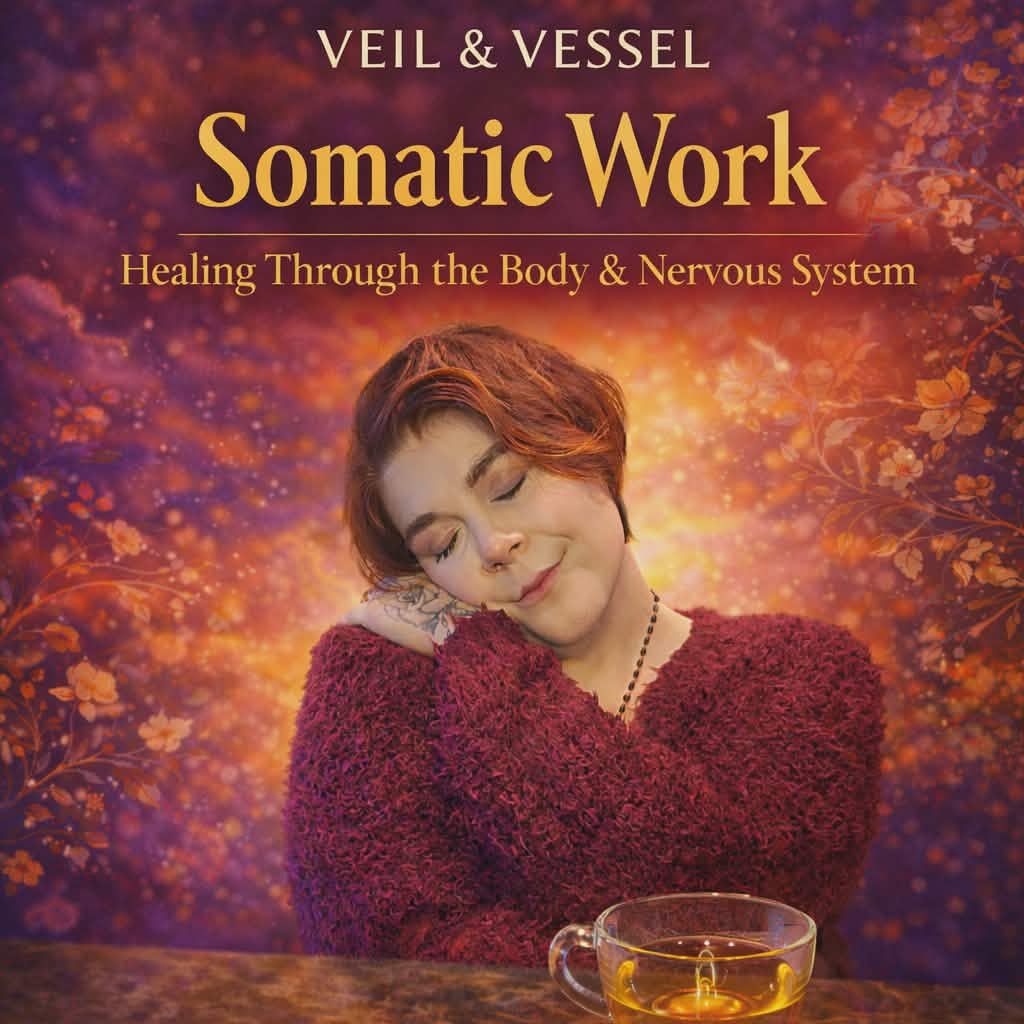
Much of what I understand about somatic practices I didn’t learn from books or podcasts. I learned it from my wife, Sierra. I’ve watched her develop a deep relationship with this work through her practice, Veil & Vessel, and although our paths aren’t identical and the way I approach nervous system work often looks different from the way she does it, I’m beginning to fully appreciate insights she has been living and sharing for a long time. That realization has been humbling in the best way.
Sierra’s work focuses on helping people reconnect with the intelligence of their own bodies, something many of us have been trained to ignore in a culture that prioritizes thinking over feeling. Watching her do this work has been a constant reminder that the body often understands things long before the mind catches up.
Many people carry stress, trauma, and emotional tension that live not only in their thoughts but in their nervous systems, and when those patterns remain unresolved they quietly shape how we respond to pressure, conflict, and uncertainty.
Somatic work approaches this differently than traditional mindset work. Instead of trying to out-think the nervous system, it works directly with the body through awareness, regulation, and guided practices that help people notice and release stored patterns. Through that process people begin to increase their ability to stay present with difficult emotions and experiences without becoming overwhelmed by them. In other words, they expand capacity.
If you’re curious about exploring somatic work more deeply, you can learn more about Sierra’s work through Veil & Vessel:
Leadership Might Actually Be Capacity
The more I sit with this idea, the more I notice how often it shows up in leadership.
Anyone who has been in a tense meeting or a difficult family conversation has seen this dynamic play out. One person becomes reactive and the entire room tightens, while another person stays calm, listens carefully, and slows the moment down. Without announcing it, that second person often becomes the center of gravity in the room.
In relationships, families, and communities, the person who can remain grounded while others become overwhelmed often becomes the stabilizing presence, not because they dominate the conversation but because they have the capacity to remain present when the moment becomes intense. That steadiness tends to ripple outward. When one person regulates, it often helps others regulate as well.
Leadership, in many ways, may have less to do with control and more to do with the capacity to remain present when things become difficult.
A Realization Still in Progress
I’m not writing this from the mountaintop. This realization is happening while I’m still doing the work myself, and the patterns I’m noticing are still unfolding. But the more I pay attention, the more it seems that many problems that appear to be discipline problems, communication problems, or strategy problems are actually capacity problems.
The invitation may not be to eliminate pressure from life, which is rarely possible anyway. The invitation may be to expand our ability to remain present inside that pressure so that it no longer overwhelms us.
A Question Worth Sitting With
If this realization is pointing in the right direction, the work becomes fairly straightforward.
Train the nervous system, expand the container, increase capacity, and allow the moments that once overwhelmed you to become experiences you can finally hold.
Life doesn’t necessarily get easier as we grow, but our capacity to meet it can, and that changes the way we experience everything.