People Are No Longer Attracted to Chaos.
I asked a simple question recently on my personal page and across ten different relationship groups, including spaces centered around men, women, LGBTQ relationships, polyamory, monogamy, spiritual communities, pagan spaces, and atheist groups:
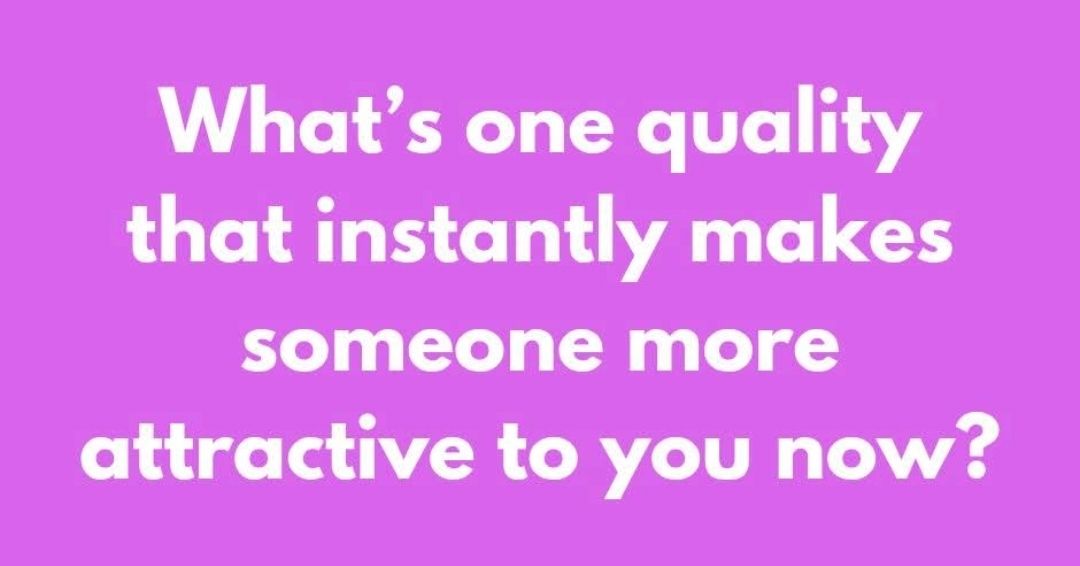
I expected answers about confidence, chemistry, ambition, humor, or physical attraction. Those answers showed up too, but what surprised me was the deeper pattern underneath almost all of the responses. People were not describing excitement. They were describing relief.
Again and again, people answered with things like consistency, kindness, emotional intelligence, honesty, respect, curiosity, integrity, and “someone who feels safe to build with.”
One woman wrote that she used to be attracted to “fireworks,” the emotional highs and lows that felt passionate when she was younger. Now, she said she is attracted to “the man that feels like a warm cozy fireplace.” That line stayed with me, partly because I recognized myself in it.
If I’m honest, most of my life I chased intensity. I liked big feelings, charged chemistry, emotional electricity, and connections that felt impossible to ignore. That tendency showed up not only in relationships, but in my hobbies and pastimes too. I spent over a decade chasing tornadoes across Texas, driving toward storms most people were trying to escape from. Looking back, I think that says something about me. Somewhere in me, intensity felt alive.
These days, after a lifetime of chasing severe weather, I sometimes joke that I run to the storm shelter for every dust devil, and there’s probably more truth in that than humor.
Somewhere along the way, whether it’s age, experience, fatherhood, or exhaustion, I’ve noticed something changing in myself. Peace has started becoming more attractive than intensity, and judging from the responses I received, a lot of other people are feeling that shift too.
When Intensity Starts Feeling Familiar
What struck me most was how universal the responses were. Different ages, different genders, different relationship structures, different belief systems, and yet underneath all of it, people were describing the same longing.
A lot of us were raised around inconsistency, emotional unpredictability, avoidance, criticism, shutdown, or relationships where love always felt slightly unstable. When those experiences become familiar early in life, intensity can start to feel like chemistry. Not because chaos is healthy, but because unpredictability starts feeling emotionally familiar.
People spend years chasing relationships that feel consuming, dramatic, emotionally overwhelming, and then slowly realize they are exhausted. Somewhere along the way, attraction starts changing. Calm starts becoming attractive. Consistency starts becoming attractive. Someone who communicates clearly instead of disappearing becomes attractive. Someone who can stay grounded during conflict becomes attractive. Not because people become boring with age, but because eventually many of us grow tired of surviving our relationships instead of resting inside them.
One commenter wrote: “When someone’s words and actions consistently match, your nervous system stops having to stay on alert trying to figure them out.” That is such a powerful realization.
Many people move through relationships constantly monitoring emotional shifts, withdrawal, defensiveness, mixed signals, or subtle signs of rejection. They are not relaxing into connection. They are trying to stay emotionally prepared for the next shift. And sometimes what we once called passion was actually anxiety mixed with chemistry.
The Difference Between Accountability and Shame
Another person shared that they had stopped apologizing constantly and started replacing apologies with gratitude and accountability instead. Instead of saying: “I’m sorry I forgot,” they now say: “Thank you for being patient with me.” That distinction matters more than most people realize.
Many people were taught to apologize for existing long before they ever learned how to communicate needs, mistakes, or emotions in healthy ways.
One woman commented that she had started replacing “I’m sorry” with “Am I asking for too much?” She explained that growing up, her needs always felt like a burden. That landed heavily, because so many adults are still carrying relationship patterns formed in environments where their emotions, boundaries, or needs were treated as inconvenient.
People learn to soften requests before speaking, over-explain themselves, apologize constantly, and become hyper-aware of emotional changes in others. Over time, self-erasure can start feeling normal. Then one day they realize something surprising: healthy love often feels much quieter than chaos.
What People Are Really Longing For
The comments on that post were not really about attraction in the shallow sense. They were about emotional safety. People talked about wanting honesty, respectful conversations, emotional steadiness, accountability, kindness, warmth, humor, and relationships where they no longer had to constantly analyze what someone “really meant.”
They were describing the experience of finally being able to exhale. Not empty or passionless, and not detached from emotion, just steady enough that you no longer have to brace yourself inside the relationship. I think that is what so many people were really describing underneath their answers. Not the absence of attraction, but the absence of fear.
Maybe maturity in relationships is not becoming less passionate. Maybe it is finally learning the difference between intensity and safety. Maybe one of the most attractive things in the world is meeting someone whose presence allows you to stop bracing for impact and realize love was never supposed to feel like emotional survival in the first place.
A lot of the work I do with coaching clients centers around exactly this shift. Helping people recognize the difference between connection and activation, rebuild communication and emotional safety, and create relationships that feel grounded instead of constantly reactive.
If this resonates with you, or if you’re realizing how much of your relationship history has been built around surviving instead of resting, you can learn more about my coaching work at SirChristopher.org. Humanity may never fully stop romanticizing chaos, but at least some of us are finally getting tired enough to choose peace instead.