Most Relationship Debates About Equality Are Really About Power
Most couples arguing about leadership and equality aren’t actually disagreeing about roles. They’re reacting to how power has shown up in their past.
I asked a simple question in a group about relationships, what “traditional” actually means, and whether strong partnerships need a clear leader or are better built on equality.
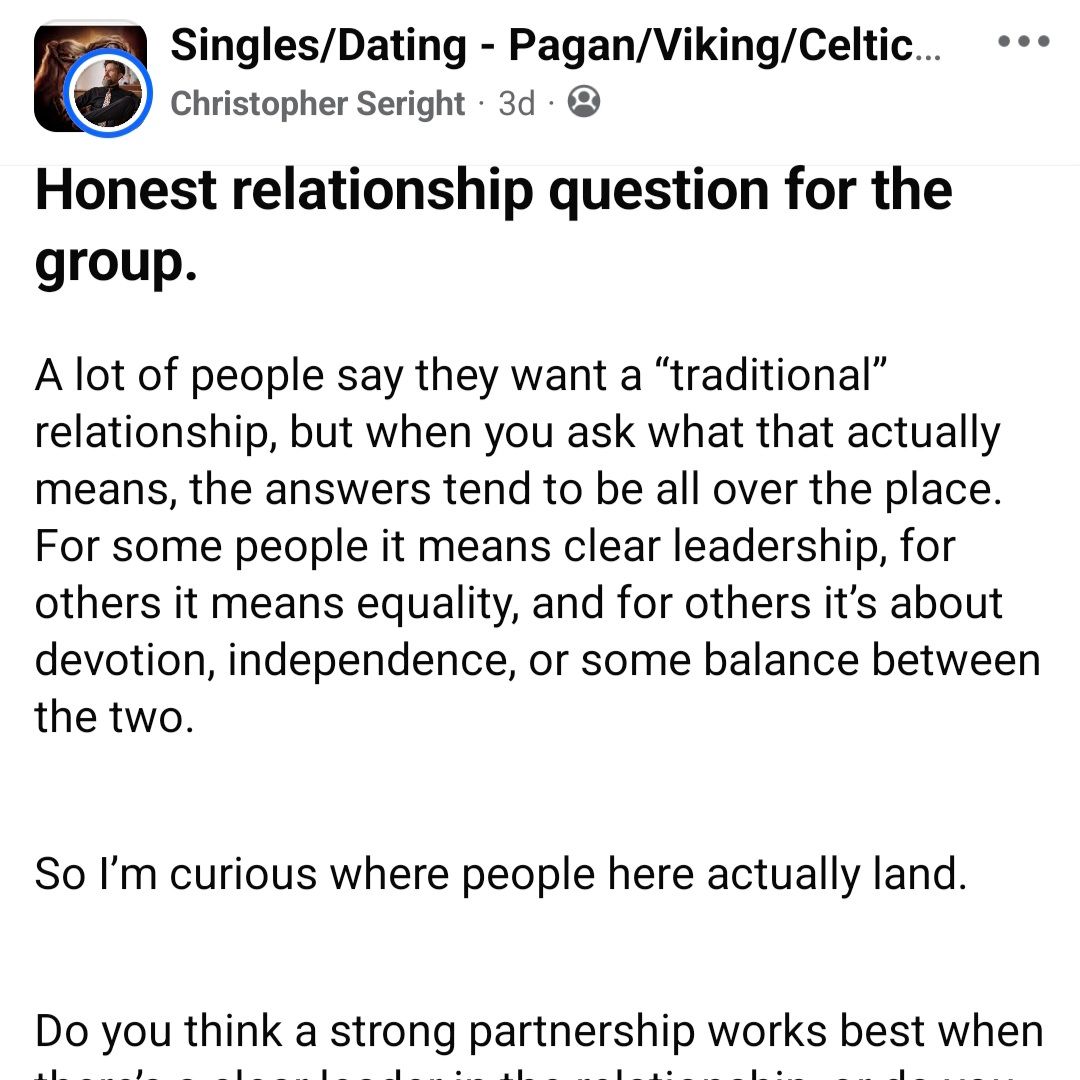
I said I wasn’t trying to start a fight, which in hindsight feels like whispering into a storm and hoping it stays calm.
Because what came back wasn’t one answer or even two opposing sides. It was dozens of interpretations layered on top of each other, people talking about leadership, equality, devotion, independence, polarity, teamwork, protection, autonomy, and somehow all of them were convinced they were responding to the same question. They weren’t, not really.
Everyone’s Answer Sounded Different, But Felt the Same
If you step back from the wording and listen for what people are actually trying to say, something interesting starts to appear. The language varies wildly, but the emotional core stays almost identical.
One person wrote, “Equality and devotion. Teamwork and honesty. Give and take.”
Another said, “The strongest relationships are the ones where both people help each other grow, not where one person is left carrying everything.”
Someone else framed it as balance, explaining, “I think the best relationships are when it’s a partnership. Decisions are made together, no one leads.”
And then right alongside that came a very different perspective:
“Leadership without authoritarianism… there won’t ever be a time when a relationship is realistically ‘equal.’ One person is going to carry more in certain areas.”
Both of these are trying to solve the same problem, they just don’t trust the same solution.
Because underneath all of it, people are saying the same thing in different ways. They want partnership, they want support, they want to feel safe enough to relax without feeling controlled, and they don’t want to carry everything alone.
The disagreement isn’t about what people want. It’s about what they believe will get them there.
The Real Divide Isn’t Leadership vs Equality
What stood out wasn’t that people disagreed about structure, it’s that they were reacting to what those structures have meant in their own lives.
Because every relationship already has a power dynamic whether anyone names it or not. Someone initiates more, someone regulates conflict more, someone carries more emotional weight, someone takes the lead in certain decisions, and even in relationships that swear they are perfectly equal, those patterns still form.
So the real divide isn’t leadership versus equality. It’s whether power in the relationship is conscious or unconscious, whether it’s something you take responsibility for or something that quietly runs the dynamic in the background.
Some people want structure because they’ve experienced chaos, others reject structure because they’ve experienced control, some want equality because they’ve been dominated in unhealthy ways, while others feel abandoned inside “equality” because no one stepped forward when it mattered.
The argument isn’t philosophical, it’s personal, because most people aren’t reacting to ideas, they’re reacting to what those ideas felt like in their last relationship.
Why “Traditional” Doesn’t Mean Anything Anymore
The word itself might be the biggest source of confusion. For some people, “traditional” means clarity, stability, and roles that reduce friction. For others, it means outdated expectations, loss of autonomy, and being placed into something they didn’t choose. That tension showed up immediately.
“What tradition? Whose tradition?” one person asked, and it cuts right to the core of the issue.
Another response pushed harder, saying, “The whole ‘traditional wife’ marriage is rooted in a patriarchy… I doubt a lot of us want to be subservient.”
And then in the same conversation someone described a version of structure that felt grounded instead of restrictive:
“My dad was the head of the house and we loved and respected him, but he also knew mom had more experience in certain things, so he let her lead in those areas.”
Same word, completely different lived experiences.
So when people argue about “traditional,” they’re not arguing about a shared definition. They’re reacting to what that word has meant in their own life, either something they’re trying to recreate or something they’re trying to avoid.
What I Had to Sit With Reading This
At a certain point, this stopped being about other people’s opinions and started turning inward.
I’ve talked about leadership, structure, and intentional power exchange, and I believe in those things. I’ve also had to sit with the reality that I’ve asked for leadership while still figuring out how to fully hold it, and that gap is where tension shows up whether I want to admit it or not. Because leadership isn’t a title, it’s a nervous system someone else has to feel safe inside of.
If I’m not grounded, if I’m not regulated, if I’m not clear, it doesn’t matter what I say I believe in, it won’t land as safety, it will land as pressure, and that’s the part that doesn’t get talked about enough.
It’s easy to say you want to lead. It’s harder to become someone another person can actually relax into without feeling like they need to stay on guard.
It’s easy to say you want equality. It’s harder to stay engaged when things feel uneven, when effort isn’t perfectly mirrored, or when someone else needs more than you do in a given moment.
Most of us aren’t debating ideas.
We’re reacting to where we’ve been hurt, and trying to build something that doesn’t feel like that again.
A D/s Lens Most People Are Already Living
This is where things get clearer. In D/s, we don’t pretend power isn’t there, we name it, negotiate it, define it, and take responsibility for it. That alone removes most of the confusion people are arguing about here, because both people understand what’s happening instead of guessing.
There is leadership, but there is also accountability. There is surrender, but it’s chosen, not assumed, and that clarity often creates more freedom, not less, because both people know where they stand and what they’re stepping into.
Outside of that, most relationships are still navigating power, they’re just doing it unconsciously and calling it communication issues, compatibility problems, or “we just need to work on things.” What they’re actually struggling with is unspoken power.
What Actually Seems to Work
Across all the different responses, a pattern kept surfacing, even when people disagreed on language.
“Aces in their places… what one person is great at, the other isn’t, and it switches depending on the situation.”
“We are equal partners no matter the role, you share the work, you support each other, you talk through decisions that affect your family.”
“To create a strong team, both people have strengths and weaknesses. The goal is to support each other through all situations.”
What this points to isn’t rigid hierarchy, and it isn’t perfect equality either. It’s fluid leadership inside a stable container, where both people can step forward or step back without it becoming a power struggle, because the relationship itself can hold that movement.
That only works when both people are self-aware enough to know what they’re bringing into the dynamic, instead of projecting it onto the structure itself.
The Question That Actually Matters
Maybe the better question isn’t whether you believe in leadership or equality.
Maybe it’s this:
How do you handle power when it shows up between you and another person, especially in the moments where it’s uncomfortable, uneven, or unclear?
Do you avoid it, fight over it, deny it exists, or take responsibility for how you use it and how you respond to it? Because it’s going to show up either way.
Final Thought
The more I read, the clearer it became that most people aren’t asking for control. They’re asking for relief. Relief from over-functioning, relief from carrying everything, relief from not knowing where they stand, and relief from having to stay guarded all the time, and most people don’t lose trust all at once, they lose it slowly, in the moments where power shows up and no one knows what to do with it.
Call it equality, call it polarity, call it traditional, call it whatever fits your story. If it isn’t intentional, it will default into imbalance. And if it is intentional, you start to realize you were never really arguing about roles in the first place. You were arguing about trust.
If This Feels Familiar
If you’ve found yourself in these conversations, stuck between wanting structure but not control, wanting equality but not carrying everything, or trying to lead without knowing if it’s actually landing the way you intend, this is exactly the work I do.
This isn’t theoretical. My coaching is structured, direct, and built around real dynamics, how power actually shows up, how your nervous system responds under pressure, and how to create clarity so you’re not guessing your way through connection.
You get weekly sessions, daily check-ins, and practical tasking that fits into your real life, not something you have to step away from your life to maintain.
This is for individuals and couples who are ready to stop circling the same conversations and start building something intentional.
Explore coaching here: https://sirchristopher.org/coaching