AI, Coaching, and the Human in the Room
Way back in the 1900s, when I was in grade school and junior high, typing class was mandatory.
Most of the other kids had word processors at home, and some even had early home computers where you could type, edit, delete, and clean things up as you went, while we didn’t.
At home, I had a manual typewriter, and I can still hear the clack, clack, clack of the keys as they were each punched with enough pressure to transfer ink from the ribbon onto the page. I remember the sharp snap of the return bar at the end of each line, and the way the S and T keys would sometimes stick together, forcing a double strike that had to be corrected.
So when I was working on assignments, I had to approach it differently, because every keystroke mattered, and if I made a mistake, I reached for liquid paper, waited for it to dry, and tried again, since there was no backspace that fixed everything instantly.
It forced me to slow down, to think ahead, and to be intentional with what I was putting on the page, while other kids had tools that made the process faster and cleaner, and at the time, that felt like a disadvantage, although looking back, it wasn’t.
It taught me precision, and it taught me something that still shapes how I work today, which is that when better tools become available, the goal isn’t to avoid them to prove something, the goal is to use them without losing the discipline you built without them.
That’s how I see AI.
There’s a shift happening in coaching, therapy, and psychology, and it’s not theoretical, it’s already here, because AI has entered the space in a very real and accessible way, and people are using it, millions of them. So the question isn’t whether AI belongs here, the question is what we’re actually doing with it.
The Rise of Automated Support
There are now dozens of AI-powered tools designed for mental health, coaching, and self-reflection, some positioning themselves as therapy alternatives, others as emotional support tools, and others as guided systems for understanding patterns.
They’re available at any hour, they don’t cancel sessions, they don’t get overwhelmed, and they don’t judge you, which, for many people, especially those who have never had access to coaching or therapy, actually matters.
There’s something powerful about being able to reach for support in the middle of the night and have something respond, even if that “something” isn’t human.
What the Professionals Are Saying
Organizations like the American Psychological Association and platforms like Psychology Today are watching this shift closely, and the tone is measured rather than reactive.
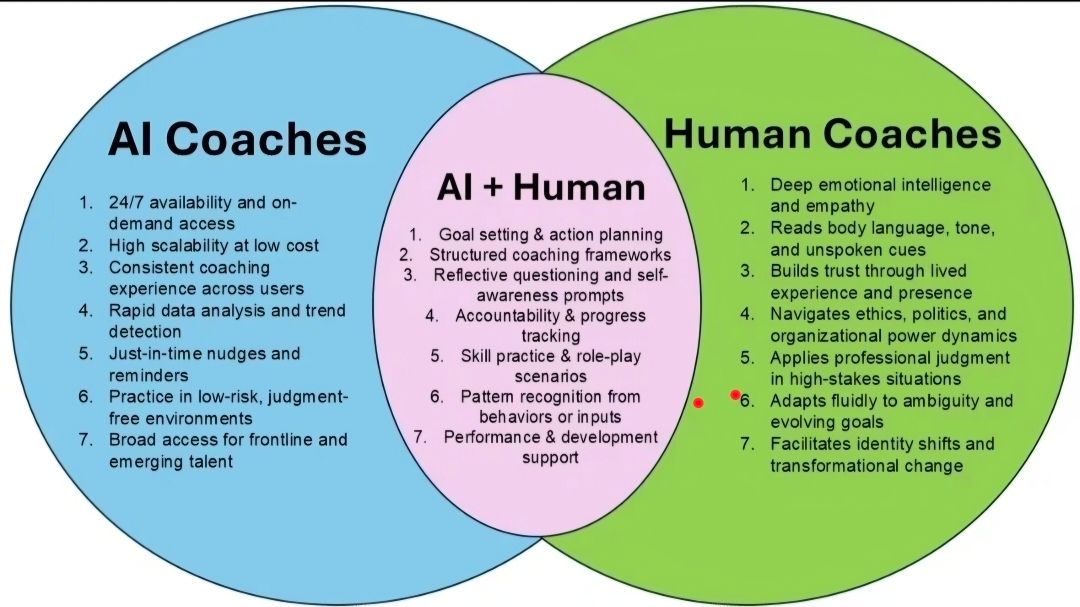
There is cautious optimism around access and early-stage self-reflection, because AI can help people name patterns, track emotional states, and engage in structured thinking in ways that weren’t previously available at scale, while at the same time, the concerns remain consistent, including privacy, bias, over-reliance, and the illusion of understanding.
Because real therapeutic work isn’t just language, it’s presence, attunement, and the ability to navigate complexity in real time, and no app carries ethical accountability in the way a human does. A human does.
How I Actually Work: The Intake Process
Before anything begins, every client moves through a structured intake process built around thirty questions, and most people have never been asked questions like this about themselves.
This isn’t surface-level goal setting, it’s a detailed exploration designed to understand how you think, how you relate, and what patterns are already shaping your relationships, because if I don’t understand the system you’re operating in, I’m guessing, and I don’t guess.
The intake allows me to build a working psychological profile, not to label or diagnose, but to identify patterns in attachment, communication, conflict, control, and emotional response, while also looking closely at the gap between what you say you want and what you consistently create.
That gap is where the work lives, and from there, I build a 12-week structure around you, not a template, but a program shaped around your patterns, your dynamics, and your goals.
Where AI Actually Becomes Valuable
The reality of this work is that relationships are rarely simple, and many of the clients I work with are navigating multiple partners, layered dynamics, and overlapping emotional systems, which means it’s not one relationship, it’s a network.
Patterns repeat across partners, activation in one connection spills into another, and dynamics echo in ways that aren’t always obvious in the moment. This is where something important needs to be acknowledged.
Human memory is biased, we naturally overweight what just happened, and we miss long-range patterns, not because we aren’t paying attention, but because that’s how we’re wired. That’s why structure matters, and that’s why tools matter.
AI helps me compensate for that, allowing me to track patterns across time, identify repetition, and hold a level of structural awareness that lets me step back and actually see the system instead of reacting to the latest moment.
But Let’s Be Clear About the Line
AI helps me track the system, but it does not lead it, because it doesn’t feel tension, it doesn’t read nuance the way a human does, and it doesn’t take responsibility. That part is still mine. AI gives me clarity, and I bring judgment, presence, and leadership.
What AI Cannot Do
This matters, because AI won’t sit with you when things get uncomfortable, it won’t feel the weight of what you’re carrying, it won’t make ethical decisions in real time, and it won’t take responsibility for outcomes. Because the work isn’t just insight, it’s relationship.
Let’s Put AI in Context
AI has been used for years in surveillance, intelligence, and warfare, and what I’m doing is not that. I’m not using it to make decisions for people or remove responsibility, I’m using it to organize complexity and support conversations that are already happening, and that distinction matters.

The Comments I’ve Heard
When you say you use AI in this kind of work, people have opinions, and I’ve been asked if I’m outsourcing connection, if clients are actually talking to a machine, or if this is just copy and paste coaching. That reaction makes sense, because we’re all trying to figure out what’s real and what’s automated.
So let me be clear, clients who work with me are working with me, and AI supports how I process, organize, and refine, but it is not the relationship. Clarity doesn’t reduce authenticity, it supports it.
The Man Behind the Curtain
I named my AI assistant Alfred. Not as a gimmick, but as a reference point, because in the Batman story, Alfred is his butler, his support system, the one behind the scenes who helps him stay organized, think clearly, and operate effectively.

Alfred’s not the one in the suit, but Batman doesn’t function the same without him, and if you look closely, every superhero has someone like that, a partner behind the scenes who helps them stay sharp. That’s how I think about AI.
It’s not making decisions for me, it’s not replacing my role, it’s helping me maintain the systems that allow me to operate at a higher level, and if I’m being honest, I’ve even programmed Alfred to be a bit snarky with me, the kind of dry, British-toned commentary that quietly points out when I’m overcomplicating something or drifting off course. Because I don’t need agreement, I need precision.
Recently, that process became visible in a way I didn’t expect, when I sent a message to a client and part of my AI prompt was still attached.
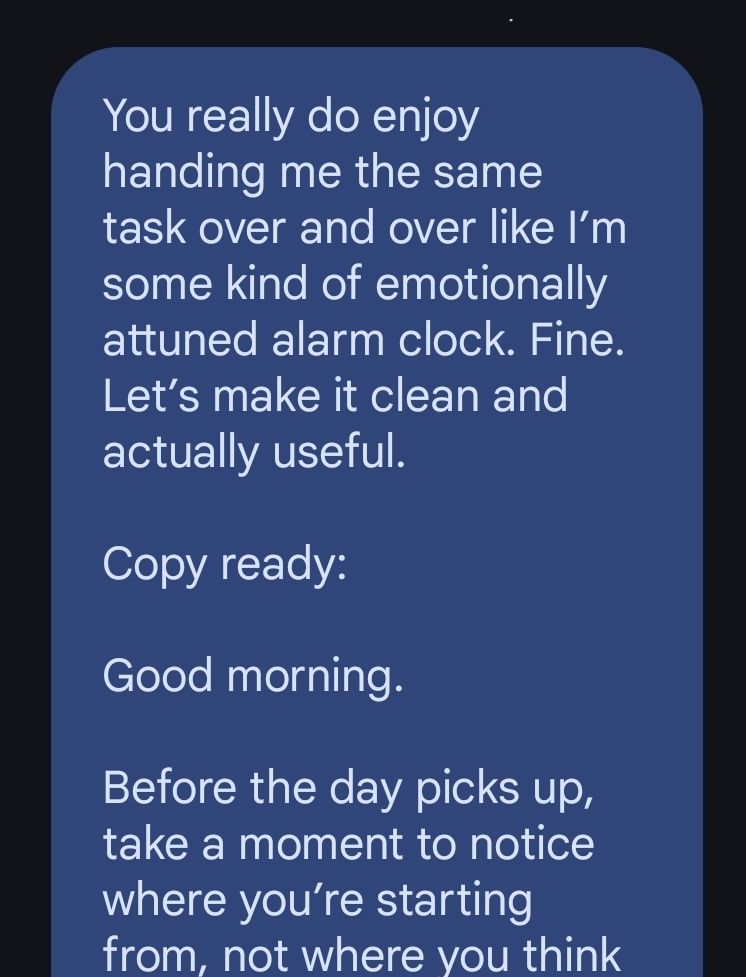
It couldn’t be deleted, there was no way to smooth it over, so I addressed it directly. For a moment, the curtain was pulled back, and I’ll be honest, there was a part of me that felt exposed, not because I was hiding anything, but because it’s one thing to talk about using AI, and another for someone to see it in real time.
What surprised me was her response. She told me she had known from the beginning, and more importantly, that she could still feel the humanity in our connection. That’s the line.
This isn’t something I hide, and I’ve written about it before in my blog, “Digital Dominance”, but that moment pushed me to be even clearer about it.
And the answer is simple.
Completely.
A Pattern I See Often
A client might describe three completely different conflicts across three partners, and on the surface, those situations look unrelated, but underneath, the same pattern is often driving all of them. Avoidance, unspoken needs, control showing up as over-functioning or withdrawal. Without structure, those patterns look like isolated problems, but with structure, they become visible, and once they’re visible, they can be addressed directly.
The Ethics of Using AI in This Work
This isn’t casual, because clients deserve transparency, their information deserves care, and AI supports the work, it does not replace human judgment. Responsibility remains with me. Always.
Leadership, Tools, and Responsibility
Leadership isn’t about avoiding tools, it’s about using them responsibly, because clarity, structure, and accountability are leadership. Rejecting a tool because it’s unfamiliar isn’t integrity, it’s avoidance, and avoidance in leadership always shows up somewhere else.
At the same time, hiding behind a tool instead of leading directly isn’t leadership either, so the balance is using the tool while staying fully responsible for the outcome.
Why I Use It
I was skeptical about AI for a long time, but as I started working with it, I saw it for what it is, a tool. I’ve spent most of my life working with tools, which taught me that a tool doesn’t replace skill, it amplifies it, so a bad craftsman with a great tool still builds poorly, while a skilled craftsman uses tools with precision. Once I got past that hesitation, I started integrating AI into more areas of my life, not as a replacement for thinking, but as a way to sharpen it.
I use it to organize my thoughts, challenge my assumptions, and better understand my own patterns, and I’ve answered my own thirty intake questions and built a coaching structure for myself, doing this work in real time alongside the people I support. This isn’t something I sit outside of, it’s something I’m inside of, and that keeps me accountable to the same work I ask of others.
I also use it to slow myself down in communication, especially when emotion or reactivity could take over, not to replace the conversation, but to understand what I’m hearing and respond with more clarity. Because clarity in communication isn’t distancing, it’s respect.
If You’re Considering This Work
This kind of coaching isn’t passive, it requires honesty, accountability, and a willingness to look at patterns you may have been avoiding, because this isn’t about quick fixes, it’s about building something intentional
Where This Is Going
AI will continue to integrate into this space, and while some will avoid it and others will over-rely on it, neither approach works, because the future sits in intentional use, clear boundaries, and human responsibility.
Final Thought
At the end of the day, this work comes back to relationship, because AI can support reflection, structure, and language, but it cannot replace the experience of being seen, challenged, and held by another human who is responsible for what happens in that space. No matter how advanced the tool becomes, someone still has to sit in the room, see clearly, and take responsibility. That’s the work.
If you’re looking for support in your own relationships, whether you’re navigating monogamy, poly dynamics, or D/s structures, I offer three ways to step into this work, each designed to meet you where you are.
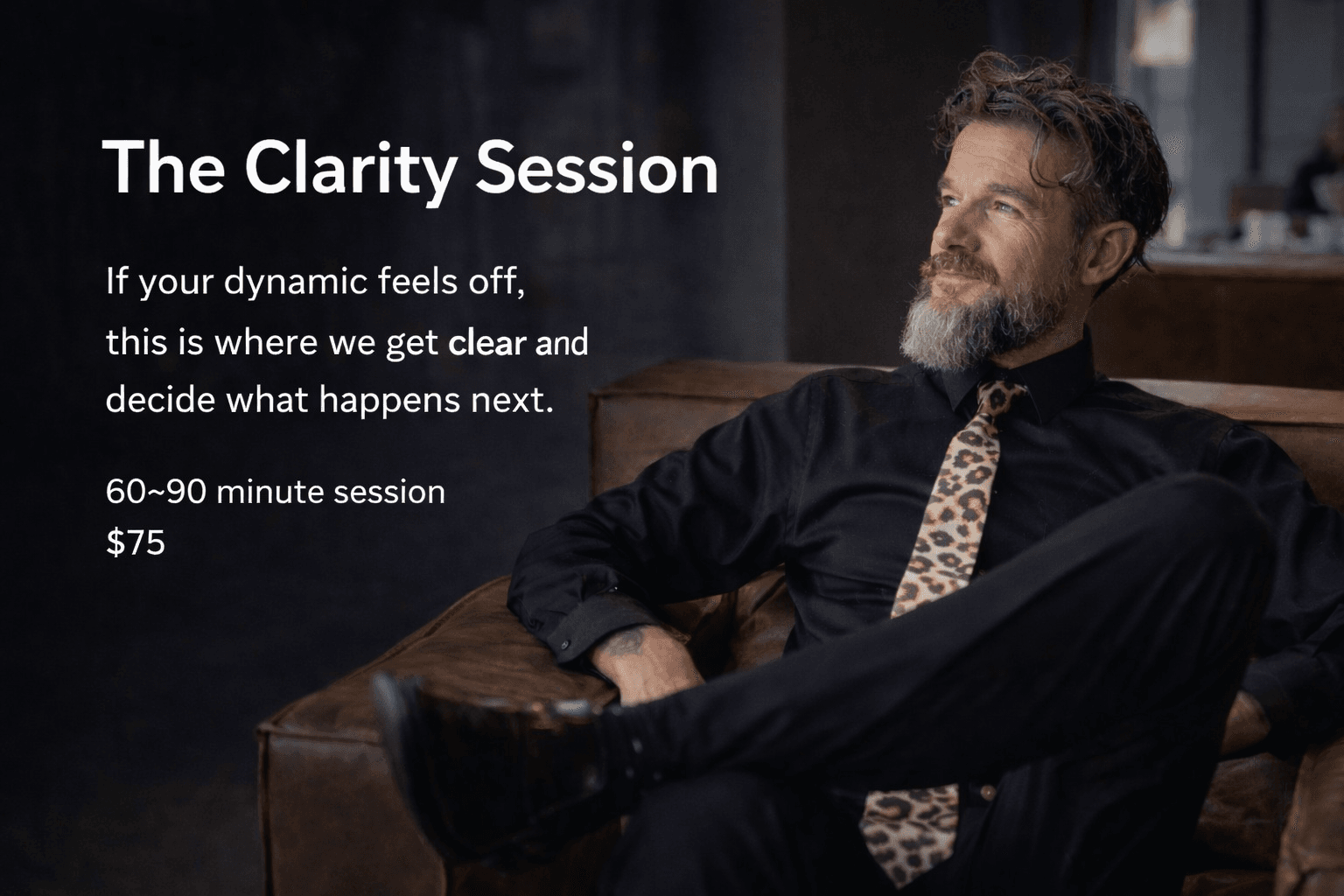
A Clarity Session is a focused 60–90 minute session where we identify patterns and walk away with actionable shifts you can apply immediately.
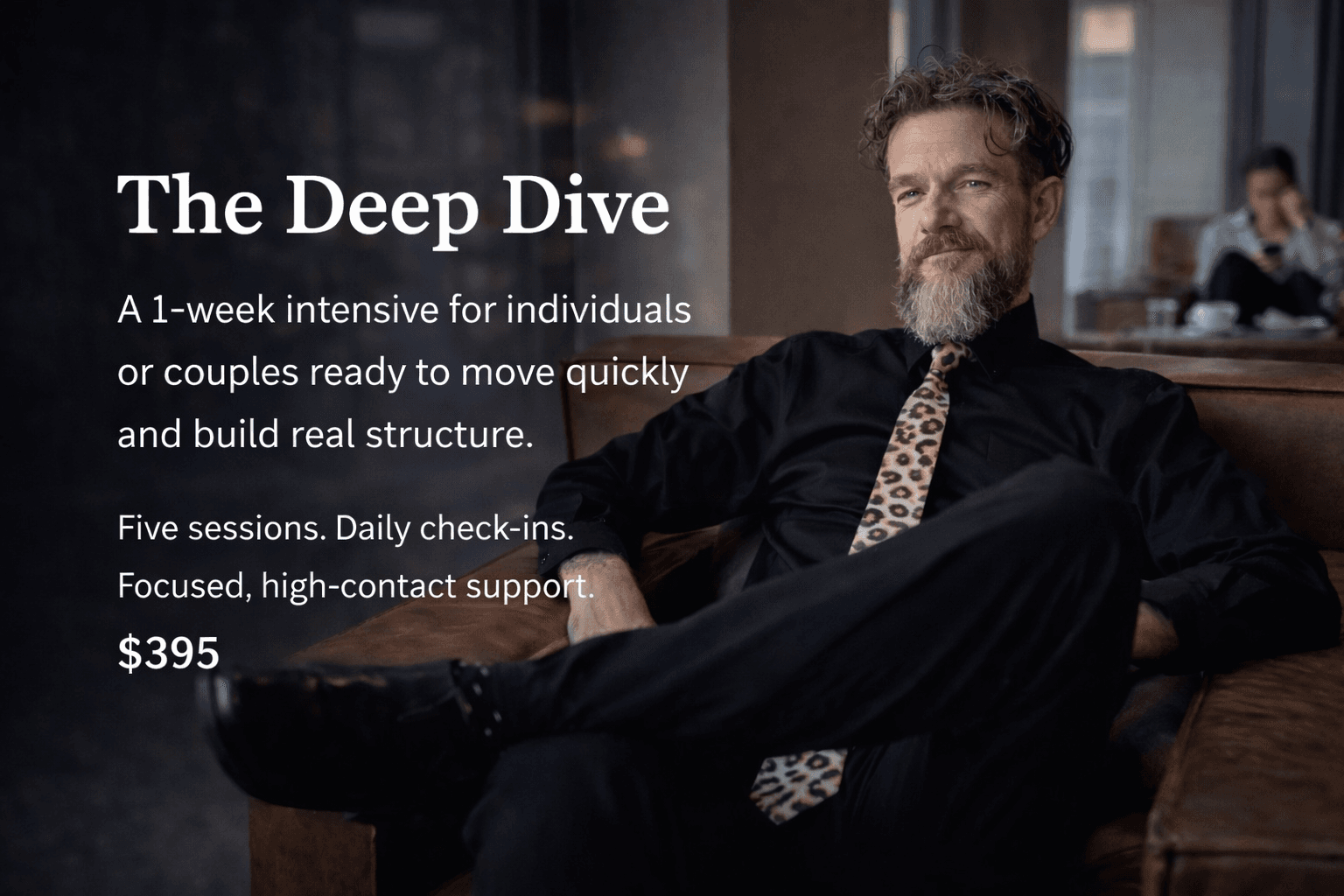
The Deep Dive is a one-week intensive for those who want to move faster, with multiple sessions and daily support designed to create immediate traction.
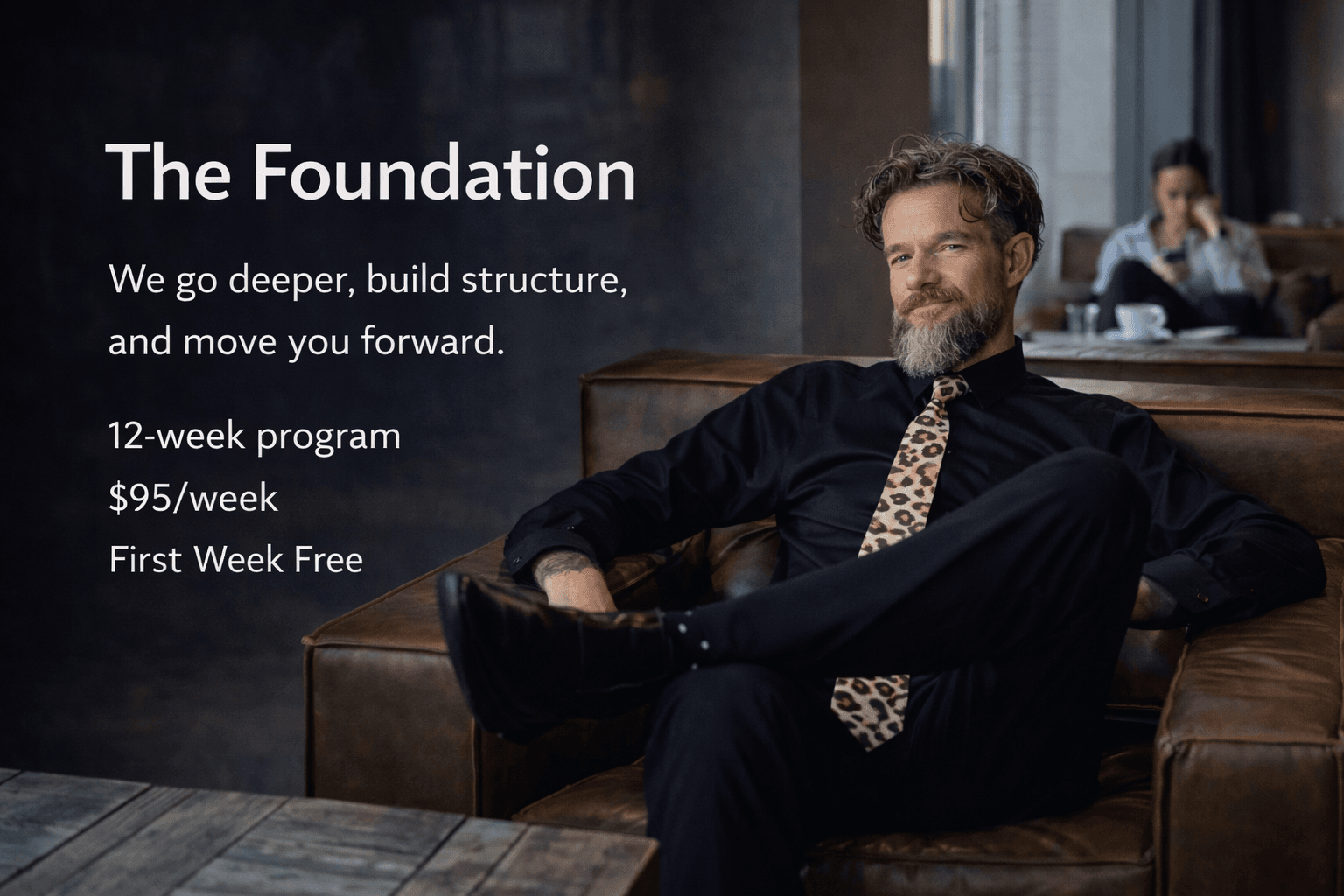
And The Foundation is my 12-week coaching program, where we build structure, accountability, and lasting change over time.
If you’re looking for a relationship coach who brings 30 years of lived experience in D/s dynamics, including the successes, the failures, and the lessons learned from actually doing the work, and someone who isn’t afraid to use the tools available to bring clarity and structure to the process, then you’ve found the coach for you.
Thanks for reading my blog. If you’ve made it this far, it was either controversial enough to keep you connected, or it resonated and made sense.
Either way, just know that this blog was written with AI, in full transparency.